
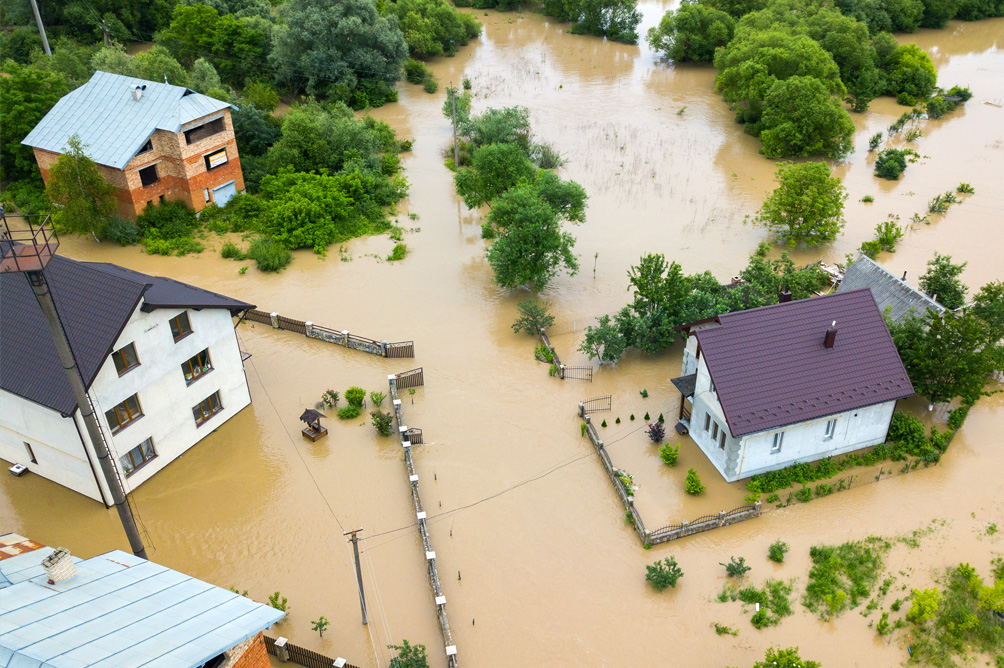
In most cases, no. A standard Texas homeowners policy generally excludes flood damage, even when flooding follows a severe storm or hurricane. The Texas Department of Insurance advises that most home policies do not cover flood damage and that homeowners may need a separate flood insurance policy for protection.
A separate policy may be available through:
- The National Flood Insurance Program (NFIP)
- A private flood insurance company
- An insurance agent who offers flood coverage options
Flood insurance is a separate purchase from homeowners insurance. It has its own policy terms, coverage limits, deductibles, and exclusions.
Flood insurance typically addresses direct physical loss caused by a flood. In general, a flood involves water that has inundated two or more properties or at least two acres of normally dry land.
Examples may include:
- Heavy rain that causes water to rise and enter a home
- Overflow from a bayou, creek, river, or drainage system
- Storm surge associated with a hurricane or tropical storm
- Water runoff that enters the home from outside
- Mudflow caused by flooding
The distinction matters because standard homeowners insurance may cover certain sudden and accidental water losses—such as a burst pipe or accidental appliance overflow—while excluding water damage caused by a flood. Coverage depends on the cause of the damage and the terms of the individual policy, so homeowners should review their policy rather than assume all water damage is treated the same way.
Flood coverage is commonly divided into two parts: building coverage and contents coverage. They are separate protections, and purchasing one does not automatically mean you have the other.
Under a standard NFIP policy, building coverage may provide up to $250,000 for the structure, while contents coverage may provide up to $100,000 for personal belongings. Contents coverage must be purchased separately.
Building coverage may help protect parts of the home such as:
- The foundation and physical structure
- Electrical and plumbing systems
- Central air conditioning and heating equipment
- Furnaces and water heaters
- Built-in appliances, cabinets, and bookcases
- Certain permanently installed flooring
- A detached garage, subject to policy terms and limits
- Debris removal after a covered flood loss
Contents coverage may help protect eligible personal belongings, including:
- Clothing and furniture
- Electronics
- Curtains and certain portable appliances
- Washers, dryers, freezers, and food in freezers
- Certain valuables, subject to specific policy limits
For a Houston, Texas homeowner, it is important to review the amount of both building and contents coverage. A home’s rebuild cost and the total value of belongings may exceed standard NFIP limits, making a conversation about available options especially valuable.
Flood insurance is valuable protection, but it is not designed to cover every expense that may follow a flood.
Under the NFIP, exclusions or limitations can apply to items and expenses such as:
– Temporary living expenses, hotel costs, or loss of use
– Business interruption losses
– Landscaping, trees, patios, decks, fences, pools, and outdoor property
– Currency, precious metals, and certain valuable papers
– Many items stored in below-ground spaces
– Vehicles, which are typically addressed through auto insurance rather than flood coverage
The NFIP summary of coverage notes that below-ground rooms, crawl spaces, and basements may receive limited coverage, and some personal property stored in those areas may not be covered.
Flood risk is not limited to properties near the coast, a bayou, or a mapped high-risk flood zone. Heavy rain, drainage issues, nearby development, and changing weather conditions can create flood exposure in many parts of Houston, Spring, Magnolia, and surrounding Texas communities.
If your home has a mortgage from a federally regulated or insured lender and is located in a high-risk flood area, the lender may require flood insurance. Even if a policy is not required, it may still be worth considering based on your property’s location, elevation, prior flood history, and ability to pay for repairs out of pocket.
The Texas Department of Insurance notes that flood policies typically take effect 30 days after purchase. Shopping only after a storm is forecast may be too late.
Before purchasing flood insurance in Houston or elsewhere in Texas, ask these questions:
| Question | Why it matters |
|---|---|
| Does my homeowners policy include any flood coverage? | Most do not, but you should confirm the exact policy language. |
| Do I need building coverage, contents coverage, or both? | Your home’s structure and belongings may require separate limits. |
| What is the waiting period? | New flood policies commonly have a 30-day waiting period, subject to exceptions. |
| What deductible applies? | You may have separate deductibles for building and contents coverage. |
| Are my coverage limits enough? | NFIP limits may not fully match your home’s rebuild cost or the value of your belongings. |
| What exclusions apply? | Knowing what is not covered prevents surprises after a loss. |
| Is private flood insurance available? | Options may vary by property, carrier, and coverage needs. |
Homeowners insurance and flood insurance serve different purposes. A standard home policy may help cover certain water-related losses, but flood damage is usually excluded and requires separate coverage.
If you own a home in Houston, Spring, Magnolia, or another Texas community, Gordon Peña can help you review your current homeowners policy, identify potential flood-insurance gaps, and discuss available coverage options.
Contact Gordon Peña today to request a home and flood insurance review for your Texas property.